Introduction
In today’s fast-paced digital world, waiting hours for a smartphone to charge is no longer acceptable. Modern users rely on their devices for communication, work, entertainment, online shopping, social media, and navigation. This growing dependence has increased the demand for fast charging technology, allowing smartphones to recharge in minutes rather than hours.
Fast charging has become one of the most important features consumers consider when purchasing a new smartphone. Whether you’re using an Android device or an iPhone, understanding how fast charging works can help you maximize battery performance and reduce charging time significantly.
In this comprehensive guide, we’ll explore everything about fast charging, including how it works, its benefits, different fast charging standards, tips to improve charging speed, and whether fast charging affects battery life.
What Is Fast Charging?
Fast charging is a technology that increases the amount of power delivered to a smartphone battery, enabling it to charge much faster than conventional charging methods.
Traditional chargers typically deliver 5 watts of power. Modern fast chargers can deliver anywhere from 18W to over 240W depending on the device and charging technology.
The basic formula is simple:
Higher Power = Faster Charging
By increasing voltage, current, or both, fast charging technologies can replenish battery capacity much more quickly.
For example:
- Standard charging: 0% to 100% in 2-3 hours
- 33W fast charging: Around 60-70 minutes
- 67W fast charging: Around 40 minutes
- 120W fast charging: Around 20 minutes
This dramatic reduction in charging time has transformed the smartphone industry.
How Fast Charging Works
To understand fast charging, it’s important to know how power is delivered to a smartphone.
Power is measured in watts and calculated as:
Power (W) = Voltage (V) × Current (A)
Fast charging systems increase either:
- Voltage
- Current
- Or both
The smartphone and charger communicate through smart charging protocols. Once compatibility is confirmed, the charger delivers the maximum safe power the phone can handle.
Modern smartphones contain advanced charging management systems that monitor:
- Battery temperature
- Voltage levels
- Charging cycles
- Battery health
These systems ensure charging remains fast while maintaining safety.
Different Types of Fast Charging Technologies
1. USB Power Delivery (USB-PD)
USB Power Delivery is one of the most widely adopted fast charging standards.
Benefits include:
- Universal compatibility
- High power delivery
- Safe charging
- Used by smartphones, tablets, and laptops
Many flagship smartphones support USB-PD charging.
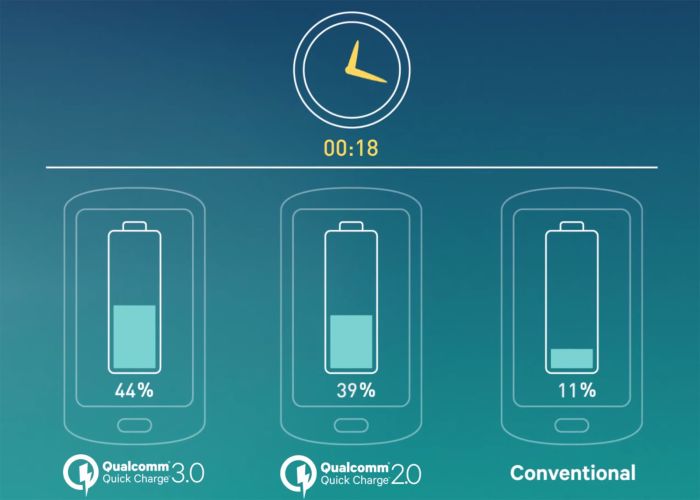
2. Qualcomm Quick Charge
Qualcomm developed Quick Charge for smartphones powered by Snapdragon processors.
Key features:
- Faster charging speeds
- Intelligent power management
- Wide device compatibility
- Multiple generations of improvement
Popular versions include Quick Charge 3.0, 4.0, and 5.0.
3. Samsung Super Fast Charging
Samsung uses its own fast charging implementation based on USB Power Delivery.
Features:
- Up to 45W charging
- Intelligent battery protection
- Fast top-up charging
Found in many Galaxy flagship devices.
4. Oppo SuperVOOC
Oppo’s SuperVOOC technology is among the fastest charging systems available.
Advantages:
- Extremely rapid charging
- Advanced cooling systems
- High charging efficiency
Some devices can charge fully in less than 30 minutes.
5. Xiaomi HyperCharge
Xiaomi has pushed charging speeds beyond 100W.
Benefits include:
- Ultra-fast charging times
- Smart battery protection
- Advanced heat management
HyperCharge technology continues to set new industry records.
Benefits of Fast Charging
Saves Valuable Time
The biggest advantage of fast charging is convenience.
Instead of waiting several hours, users can gain significant battery life in just a few minutes.
For example:
- 10-minute charge can provide several hours of usage.
- 20-minute charge may reach 50% battery capacity.
Improves Productivity
Professionals who rely on smartphones throughout the day benefit greatly from fast charging.
Quick charging ensures:
- Fewer interruptions
- Increased productivity
- Better workflow management
Better Travel Experience
Travelers often have limited access to power outlets.
Fast charging allows users to:
- Quickly recharge at airports
- Charge during short breaks
- Reduce dependency on power banks
Enhanced User Experience
Modern consumers expect instant results.
Fast charging supports:
- Continuous connectivity
- Streaming
- Gaming
- Video conferencing
without lengthy charging interruptions.
Does Fast Charging Damage Battery Life?
This is one of the most common concerns among smartphone users.
The answer is:
Modern fast charging technologies are generally safe when used correctly.
Manufacturers implement several protections including:
- Temperature monitoring
- Overcharge protection
- Voltage regulation
- Current management
However, excessive heat remains the primary factor affecting battery degradation.
Using certified chargers and cables minimizes risks and helps preserve battery health.
Tips to Increase Mobile Charging Speed
Use the Original Charger
Always use the charger provided by the manufacturer whenever possible.
Original chargers are optimized for your device’s charging protocol.
Use High-Quality Charging Cables
Poor-quality cables can reduce charging efficiency.
Choose:
- Certified cables
- USB-C fast charging cables
- Manufacturer-approved accessories
Enable Airplane Mode
Airplane mode disables:
- Cellular networks
- Wi-Fi
- Bluetooth
This reduces power consumption and speeds up charging.
Turn Off the Phone While Charging
A powered-off device charges significantly faster because background processes stop consuming energy.
Avoid Using the Phone While Charging
Gaming, video streaming, and social media increase power consumption and generate heat.
For maximum charging speed:
- Stop gaming
- Close unnecessary apps
- Let the device charge uninterrupted
Keep the Device Cool
Heat slows charging performance.
To maintain optimal charging speed:
- Remove thick phone cases
- Avoid direct sunlight
- Charge in a cool environment
Wireless Fast Charging
Wireless charging technology has improved significantly.
Modern wireless chargers support:
- 15W charging
- 30W charging
- 50W charging
- Even higher speeds in premium devices
Advantages include:
- Convenience
- Reduced cable wear
- Cleaner charging setup
However, wired fast charging remains faster in most situations.
Future of Fast Charging Technology
The future of smartphone charging looks promising.
Emerging innovations include:
200W+ Charging
Manufacturers continue pushing charging speeds higher while improving safety.
Solid-State Batteries
These next-generation batteries may offer:
- Faster charging
- Higher energy density
- Improved safety
AI-Powered Charging
Artificial intelligence can optimize charging patterns based on user habits.
Benefits include:
- Better battery health
- Reduced heat generation
- Smarter power management
Wireless Charging Advancements
Future wireless systems may eventually match wired charging speeds.
This could lead to completely cable-free smartphone experiences.
Common Fast Charging Myths
Myth 1: Fast Charging Always Damages Batteries
Reality: Modern smartphones include battery protection systems that make fast charging safe.
Myth 2: Overnight Charging Is Dangerous
Reality: Modern devices automatically stop charging when reaching full capacity.
Myth 3: All Fast Chargers Are the Same
Reality: Different charging standards offer different speeds and compatibility levels.
Myth 4: Bigger Charger Means Faster Charging
Reality: The phone determines how much power it can safely accept.
Conclusion
Fast charging technology has revolutionized the way we use smartphones. By delivering significantly higher power levels, fast charging reduces downtime, improves productivity, and enhances overall user convenience.